Mission Statement
Combining empirical, philosophical, and contemplative traditions, the META Lab addresses broad questions that cross traditional disciplinary boundaries. For topics and associated questions that interest us, visit the Research page here.
Director of the META Lab, Dr. Jonathan Schooler

Distinguished Professor | Director, Center for Mindfulness and Human Potential | Director, Sage Center for the Study of the Mind
View Dr. Schooler's personal page and CV.

The Aha! Glow: Insights Experiences Bias Judgements of Idea Quality in Divergent Contexts (McGuinness, J.E., Schooler, J.W., Gable, S.L., Gross, M.E. 2026)
Can we trust our creative insights? While a large body of research suggests that Aha! moments predict accuracy on convergent problems, the present research tests if the diagnostic role of insight extends to divergent problems, which have many solutions and no immediate standard of accuracy. Study 1 reanalyzes daily diary data from professional writers and physicists, used as real-world proxies for divergent and convergent domains, while Study 2 explores the association between insight intensity and idea quality on laboratory measures of convergent and divergent thinking. Across studies, we find converging evidence of an Aha! glow in divergent contexts, by which strong insights bias perceptions of idea quality. Nonetheless, insights may retain an adaptive value in divergent contexts by motivating sustained engagement in creative endeavors.

The Cognitive Processes Promoted by Exposure to Art. Art Seeking Understanding (M.E. G, Schooler J.W.. 2025)
Art possesses the remarkable capacity to expand our cognitive boundaries, prompting us to perceive and engage with our surroundings in novel ways. While such virtues are intrinsically cognitive, existing research has primarily explored the emotional repercussions of art, leaving its epistemic value largely to critical theory. Indeed, the bulk of prior studies have focused on immediate responses to art, such as emotional reactions or aesthetic evaluations,1 with little attention paid to art’s downstream influence on cognitive outcomes. Our research program pioneered one of the first extensive empirical initiatives to bridge this void, adopting a comprehensive methodology that concurrently addresses individual-specific and art-specific variables.

Opening the black box: Think Aloud as a method to study the spontaneous stream of consciousness (Garg A., Shelat S., Gross M.E., Smallwood J., Seli P., Taxali A., Sripada C.S., Schooler J.W.. 2025)
Asking participants to Think Aloud is a common method for studying conscious experience, but it remains unclear whether this approach alters thought qualities—such as meta-awareness, rate of topic shifts, or the content of thoughts in task-absent conditions. To investigate this, we conducted two studies comparing thinking aloud to thinking silently. In Study 1, 111 participants alternated between 15-minute intervals of verbalizing and silently reflecting on their stream of consciousness in a counterbalanced design. A subset also reported topic shifts intermittently via self- and probe-catching methods. Results showed that the stream of consciousness was minimally reactive to the Think Aloud protocol, with no significant differences in meta-awareness and topic shifting rates. Moreover, among 21 thought qualities and 18 content topics analyzed, only three qualities (private thoughts, mind blanking, and session difficulty) and one topic (partner, intimacy, love, and sexual matters) differed between Think Aloud and Silent Think. In Study 2, 102 participants either did Think Aloud or Silent Think while responding to thought probes. Findings replicated the lack of differences in the frequency and meta-awareness of topic shifts between Think Aloud and Silent Think. Furthermore, no differences in reported cognitive load were observed between the two conditions. These results emphasize the value of the Think Aloud procedure for examining the stream of consciousness, demonstrating its reliability and minimal impact on the natural flow of thoughts. Thus, Think Aloud offers a robust model system for examining the otherwise unverbalized stream of consciousness in task-absent contexts.

Smartphone-based program for enhancing curiosity and its associated virtues: a randomized waitlist-controlled pilot study (Gross M.E., Schooler J.W.. 2025)
This study evaluated a smartphone-based intervention designed to promote dispositional curiosity through daily behavioral activities and ‘mindful curiosity’ practices, which promote an inquiring stance towards everyday experiences. Participants (N = 91) were randomly assigned to the app intervention (with half further assigned to the mindful curiosity component) or a waitlist control. Pre- and post-tests assessed trait curiosity and several of its correlates, including meaning in life, boredom proneness, and creative behavior. Results revealed that app users, compared to the control group, showed significant increases in perceptual curiosity, meaning in life, and creative behaviors. Follow-up contrasts indicated that while both app user subgroups showed increased creative behaviors, only the group with the additional mindful curiosity component showed significant increases in presence of meaning, mindful awareness, and reduced boredom proneness. These findings suggest that trait curiosity and its benefits can be cultivated through targeted interventions, particularly when combining attitudinal and behavioral strategies.


We are also drawn to broader questions at the frontier of science, including:
Meta-science
How can scientific methods be used to improve the scientific process itself?
The Decline Effect
Why do a surprising number of domains show systematic reductions in their effect sizes with repeated replication?
Anomalous Cognition
What should we make of empirical claims that challenge prevailing physical theories?
Metaphysics of science
How does the current state of science constrain our views on fundamental issues such as the existence of free will and the manner in which consciousness is manifested in the universe?
Sage Center for the Study of the Mind
The UCSB SAGE Center for the Study of the Mind, directed by Dr. Schooler, promotes the study of the relationship between brain, mind and behavior. By organizing a vast and interdisciplinary group of experts, the SAGE center aims to integrate a wide range of scholarly endeavors and technologies in the humanities, social sciences, and the sciences.
Center for Mindfulness and Human Potential
Our research is redefining scientific understanding of how rapidly and substantially a person can change by eliciting dramatic improvements in health, fulfillment, cognitive abilities, gene expression, and brain dynamics.
Join Us
Our lab explores the frontiers of consciousness, from mind-wandering and creativity to the very nature of science itself. We are dedicated to providing close mentorship in a supportive environment, helping every member reach their full potential as a researcher.
Learn more about how to join our team.
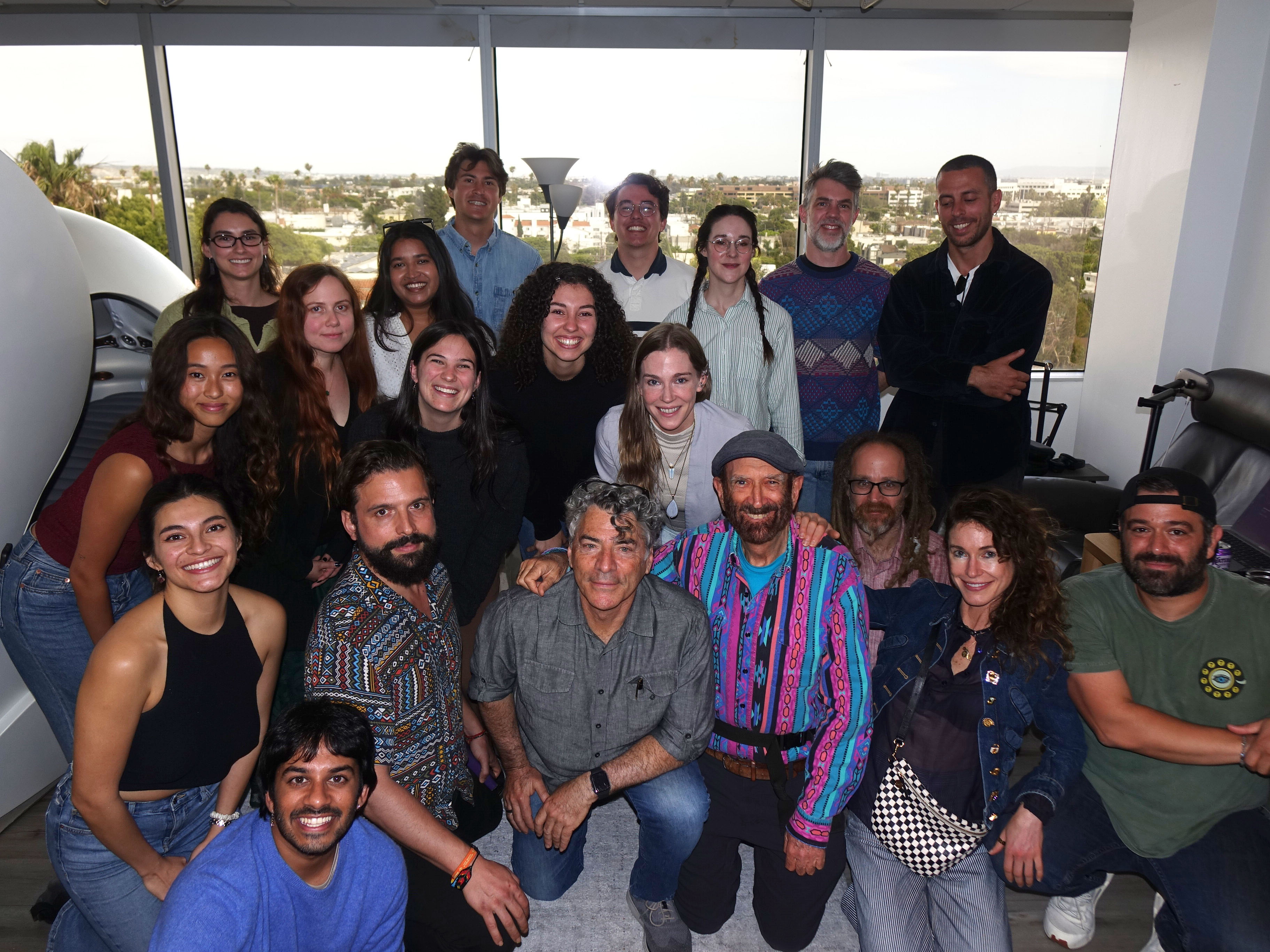
META Lab visits the Institute for Advanced Consciousness Studies (IACS) in Santa Monica, CA!

2022 Honors Student Dinner

Lab Holiday Party at Dr. Schooler's House!
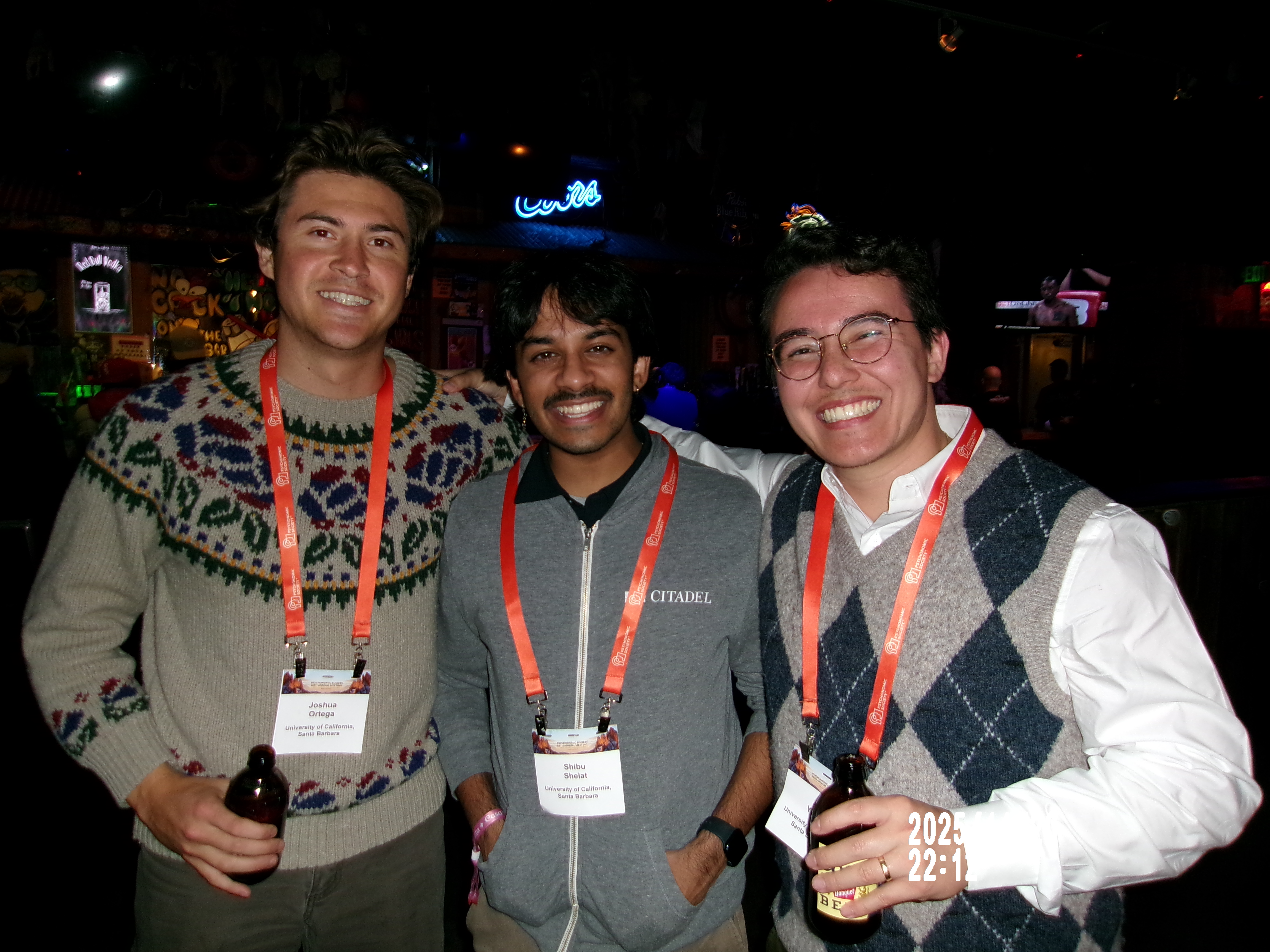
META Lab at the 2025 Psychonomics Conference student social!

Lab celebrates Asa's wedding!

Dr. Schooler in contemplative practice

Visit with Patricia and Paul Churchland, wow!

Josh Ortega presents his research at the 2024 SPSP Annual Convention