Featured News

See a recent article from UCSB's The Current, which features the latest research from Dr. Gross and Dr. Schooler on a mindful curiosity app that seeks to enhance individual curiosity. Read to learn more about how the app can induce personality changes in curiosity and related variables such as creativity and perceived meaning in life.

Check out this recent article in Science Magazine, in which our 6th-year PhD candidate, Anusha Garg, discusses research on her new smartphone-based procrastination intervention.

See a recent article from UCSB's The Current, which covers two of our lab's most recent papers on mind-wandering and memorability. Click to read about this exciting research by Shibu Shelat, META Lab graduate student, co-authored by Brecken Marome (University of Chicago), Professor Barry Giesbrecht, and Professor Jonathan Schooler.
The Hollywood Report
October 19, 2026
Click to read this recent article featuring Dr. Schooler and Dr. Gross, in which they present their research on the value of abstract art films for increasing openness and conceptual expansion.

The Times
October 19, 2026
Click to view a recent feature in The Times, which covers our lab's research on the benefits of mind-wandering.
All News
See a recent article from UCSB's The Current, which features the latest research from Dr. Gross and Dr. Schooler on a mindful curiosity app that seeks to enhance individual curiosity. Read to learn more about how the app can induce personality changes in curiosity and related variables such as creativity and perceived meaning in life.
See a recent New York Times article featuring Dr. Schooler, in which he discusses the cognitive value of engaging in creative activities after retirement!
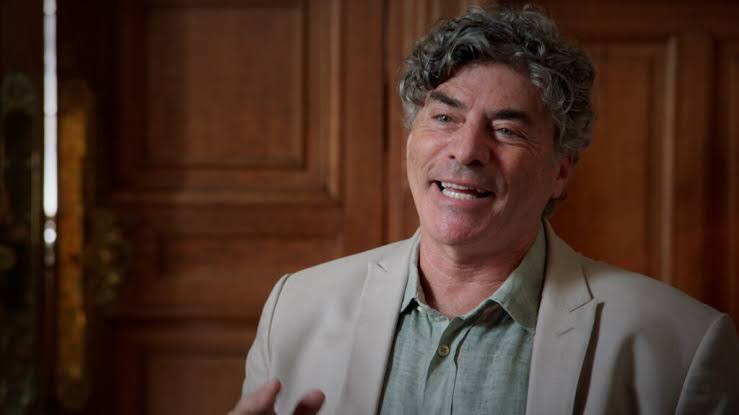
Click to watch Dr. Schooler present on the three dimensions of time theory, and how it may contribute to our understanding of consciousness within the Nested Observer Windows (NOW) framework!

Wanna learn more about META Lab's funded research on imagination? The John Templeton Foundation's Imagination Institute---a Philadelphia think tank that for the last two years has been tapping an array of talent for insight into the creative process--is hoping ultimately to come up with an “imagination quotient.” Three dozen scientific investigators at 16 institutions, including Dr. Schooler, have been awarded Templeton grant funding related to the project. But can imagination really be quantified?
![Edge's Annual Question 2016 : What Do You Consider the Most Interesting Recent [Scientific] News? What Makes It Important?](/sites/default/files/2025-09/image.png)
Edge
October 19, 2026
A defining feature of science is its capacity to evolve in response to new developments. Historically—changes in technological capacities, quantitative procedures, and scientific understanding have all contributed to large-scale revisions in the conduct of scientific investigations. Pressure is mounting for further improvements. In disciplines such as medicine, psychology, genetics, and biology researchers have been confronting findings that are not as robust as they initially appeared. Such shrinking effects raise questions not only about the specific findings they challenge, but more generally about the confidence that we can have in published results that have yet to be re-evaluated.

See a recent National Geographic Article featuring Dr. Schooler, which discusses how our senses can trigger autobiographical memory recall!
Check out this recent article in Science Magazine, in which our 6th-year PhD candidate, Anusha Garg, discusses research on her new smartphone-based procrastination intervention.
See this latest Psyche article written by our project scientist, Dr. Madeleine Gross, as she describes her atypical salience model of creativity in an engaging piece targeted for all audiences to enjoy!

PsyPost
October 19, 2026
Check out this recent article from PsyPost featuring our project scientist, Dr. Madeleine Gross, as she describes her research on atypical salience processing and creativity!
See the latest Time Health Psychology article featuring Professor Schooler on the topic of creative idea generation during seemingly mindless activities, and the potential role of the hypnagogic state!

This new Research Topic is, in part, a celebration of the 30th anniversary of the game-changing “neural correlates of consciousness” concept, first proposed as part of Crick and Koch’s 1990 “neurobiological theory of consciousness.” After thirty years of research and theory-building, scholars in the science of consciousness are perhaps not much closer to a widely-accepted theory of consciousness. Our anchor article for this Research Topic is a 2019 Frontiers in Human Neuroscience article by Hunt and Schooler entitled “The Easy Part of the Hard Problem: A resonance Theory of Consciousness.” Hunt and Schooler’s General Resonance Theory of consciousness, described in this paper, which may be viewed as a type of electromagnetic theory of consciousness, posits that electromagnetic (EM) fields may be the primary seat of consciousness. As such, the dynamics of these fields become the measurable dynamics of consciousness.
Learn more and read all of the featured papers at the editorial link below!
The Daily Nexus
October 19, 2026
The Daily Nexus features META Lab's most recent studies on Finding Focus, read the full article for an update on how the nwest version of the app can strengthen attention skills and minimize mind wandering!
See this news blitz from Nature on META Lab's newest paper and learn how we're working to improve how different fields in experimental psychology can successfully replicate each other’s work by following best practices.
Neurotherapy
October 19, 2026
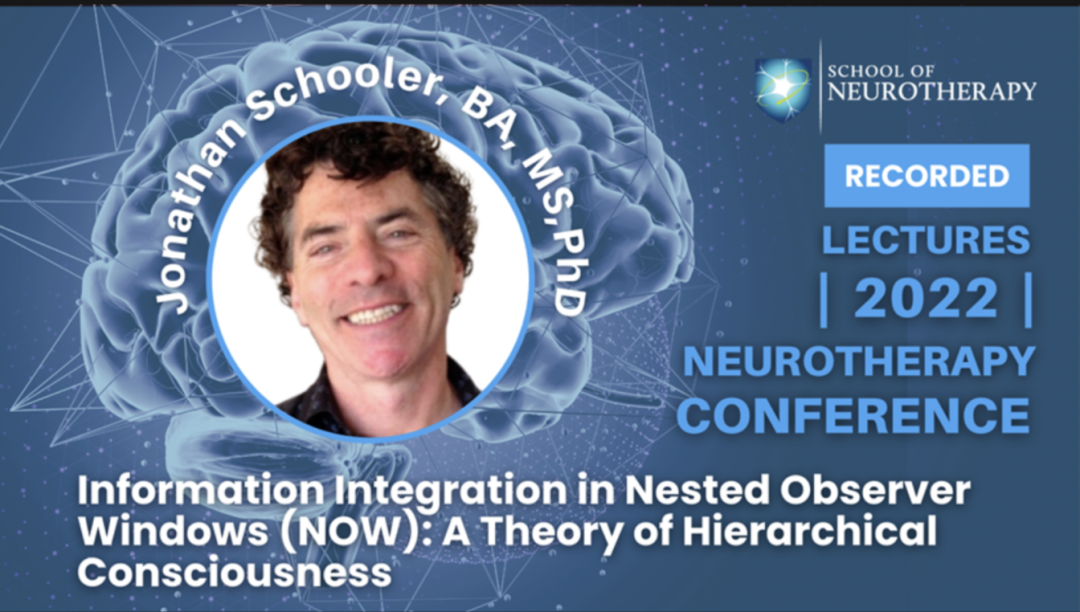
Enjoy this recording of Dr. Schooler's Lecture at the School of Neurotherapy Conference at the Beach 2022. Note the password requirement below for access!
Topic: "Information Integration in Nested Observer Windows (NOW): A Theory of Hierarchical Consciousness" Recorded: Saturday, September 17, 2022
Recording: https://vimeo.com/799978735/46c7b10913
Password: Conference2022
UCSB Magazine interviews Dr. Schooler and Dr. Gross on how META Lab and leading researchers are looking at the interior life of the mind.

In 28 very fast minutes, this interview with Dr. Schooler covers curiosity and creativity, the transformative power of asking questions, pivotal differences between general interest curiosity and deprivation curiosity, turning mind wandering into mind wondering, the loveliness of open mindfulness and implementation intentions ... and the possibility of an app for all of that!
See a recent article from UCSB's The Current, which covers two of our lab's most recent papers on mind-wandering and memorability. Click to read about this exciting research by Shibu Shelat, META Lab graduate student, co-authored by Brecken Marome (University of Chicago), Professor Barry Giesbrecht, and Professor Jonathan Schooler.

Listen to Dr. Schooler discus a broad range of topics including mind-wandering, openness, and theories of consciousness on the Feed Your Head Podcast!

Mind-Body Solution
October 19, 2026
Dr. Schooler joins Dr Tevin Naidu on the Mind-Body Solution Podcast for a deep exploration of consciousness, mind wandering, and the Nested Observer Windows (NOW) model.
Conversation with Dr. Schooler, essayist Leslie Jamison, and Lily Tyson from the Colin McEnroe show on daydreaming, why we do it, and how you can use it to lead a richer life.
See META Lab's work in this idea piece on what psychological and brain sciences tell us about breakthroughs!
See the latest Washington Post Wellness article featuring META Lab's research on the importance of mind-wandering, or "mind-wondering" for creativity!

Many artists are haunted by the specter of creative burnout, but research suggests that the best way to overcome barriers to creativity may be to accept them as part of the process. Dr. Schooler weighs in on the role of mind wandering, or mind-wondering in this process.
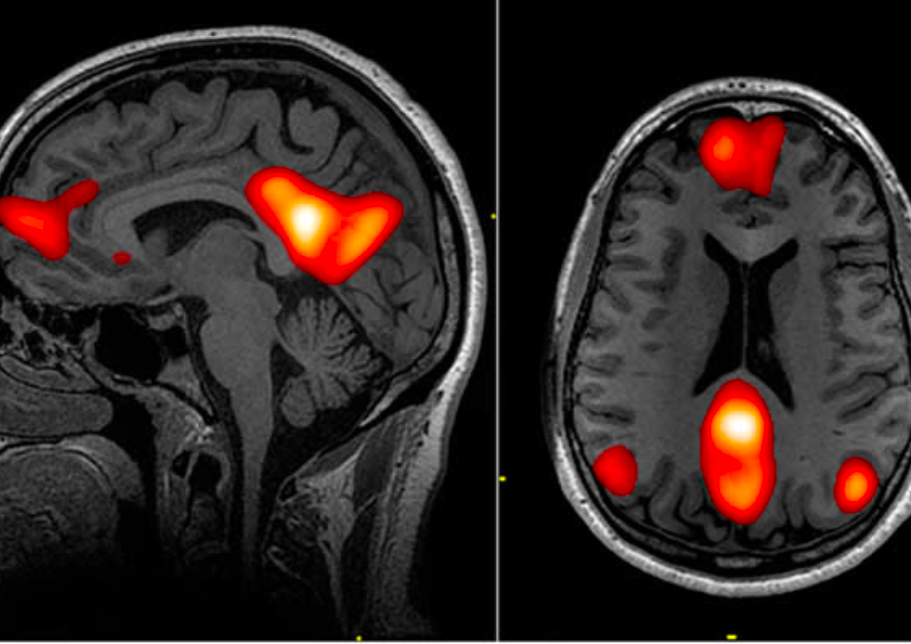
The Daily Beast features META Lab's work on "[how our] mind’s regular resting state can be the source of creativity and inspiration—and also a ton of stress and anxiety too." Check out Dr. Schooler's thoughts in the article!
This NY Times newsletter gives insight on what researchers, including Dr. Schooler, have to say about how letting your mind wander can benefit the brain.

A deep dive into the roots of how evolutionary psychology may explain why magical thinking is so central to love and what META Lab Researchers have to say on the matter.

Ciencia Cognitiva
October 19, 2026
In this interview, Luis Cásedas talks with Dr. Schooler about some currently highly active research areas that he and his team are contributing to move forward, from mindfulness and how to apply it in the classroom, to mind-wandering and its multiple facets, to consciousness and the development of an emergent theory to explain it. The interview closes with Dr. Schooler offering advice to starting researchers aiming to launch their scientific career.

What is creativity, exactly? This APA Newsletter features the psychologists and neuroscientists who are exploring where creativity comes from and how to increase your own.
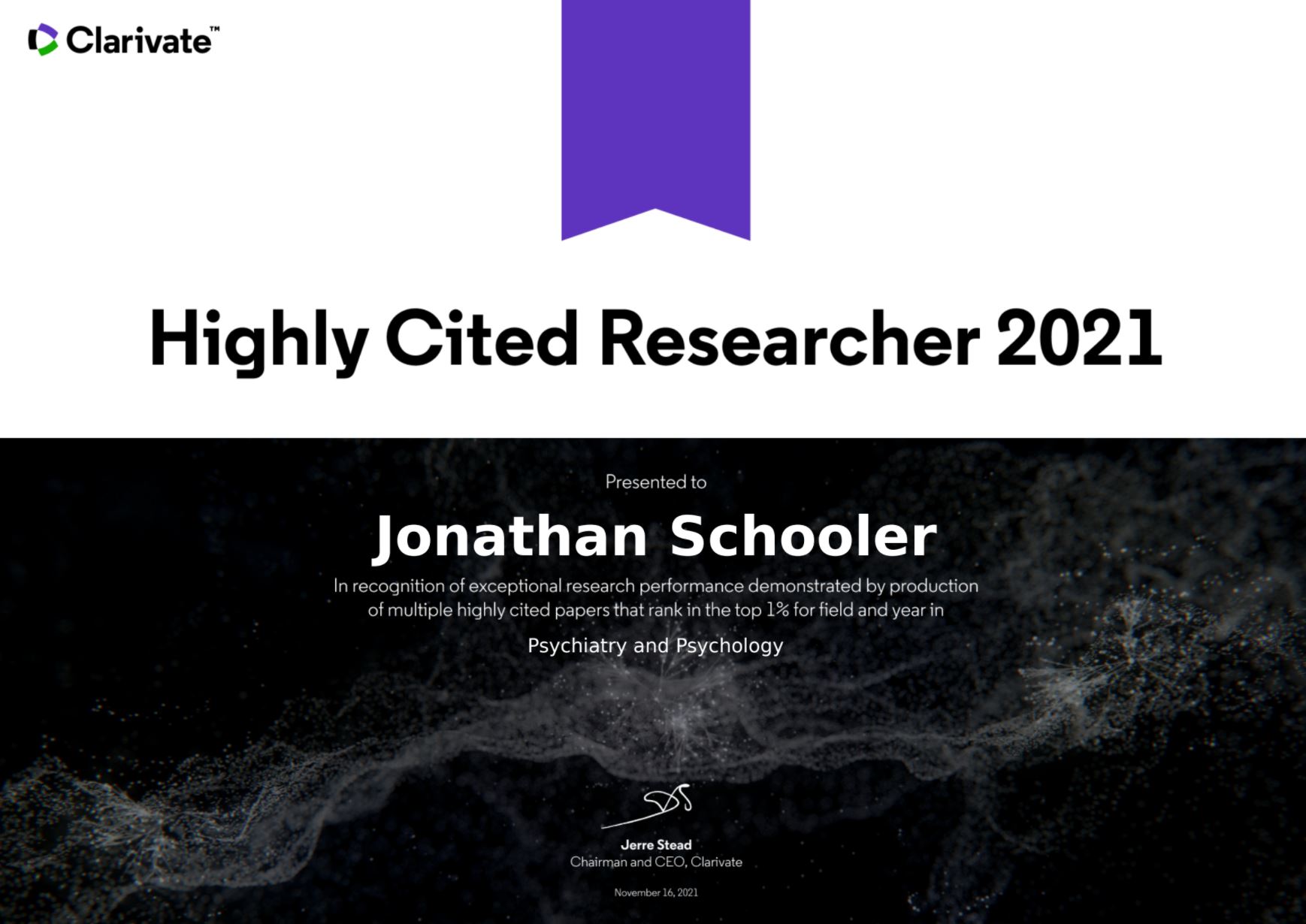
The 2021 edition of Clarivate Analytics’ Highly Cited Researchers List includes the Psychological and Brain Sciences Department’s own Jonathan Schooler. The Highly Cited Researchers List is composed of researchers whose publications rank in the top 1% of citations by field and publication year. He also appeared on the list in 2017, 2018, and 2020, making this his fourth appearance. Congratulations, Prof. Schooler!
The Hollywood Report
October 19, 2026
Click to read this recent article featuring Dr. Schooler and Dr. Gross, in which they present their research on the value of abstract art films for increasing openness and conceptual expansion.
Click to read about a recent study from Dr. Gross and Dr. Schooler, which found that artistic films can improve creative thinking, listed in the Shorts Weekly newsletter!
The Curiosity Deck
October 19, 2026
Check out the latest GBH news segment featuring Dr. Jonathan Schooler! Click to learn about mind-wandering and creative idea generation, in the context of climate change resilience.
The Times
October 19, 2026
Click to view a recent feature in The Times, which covers our lab's research on the benefits of mind-wandering.